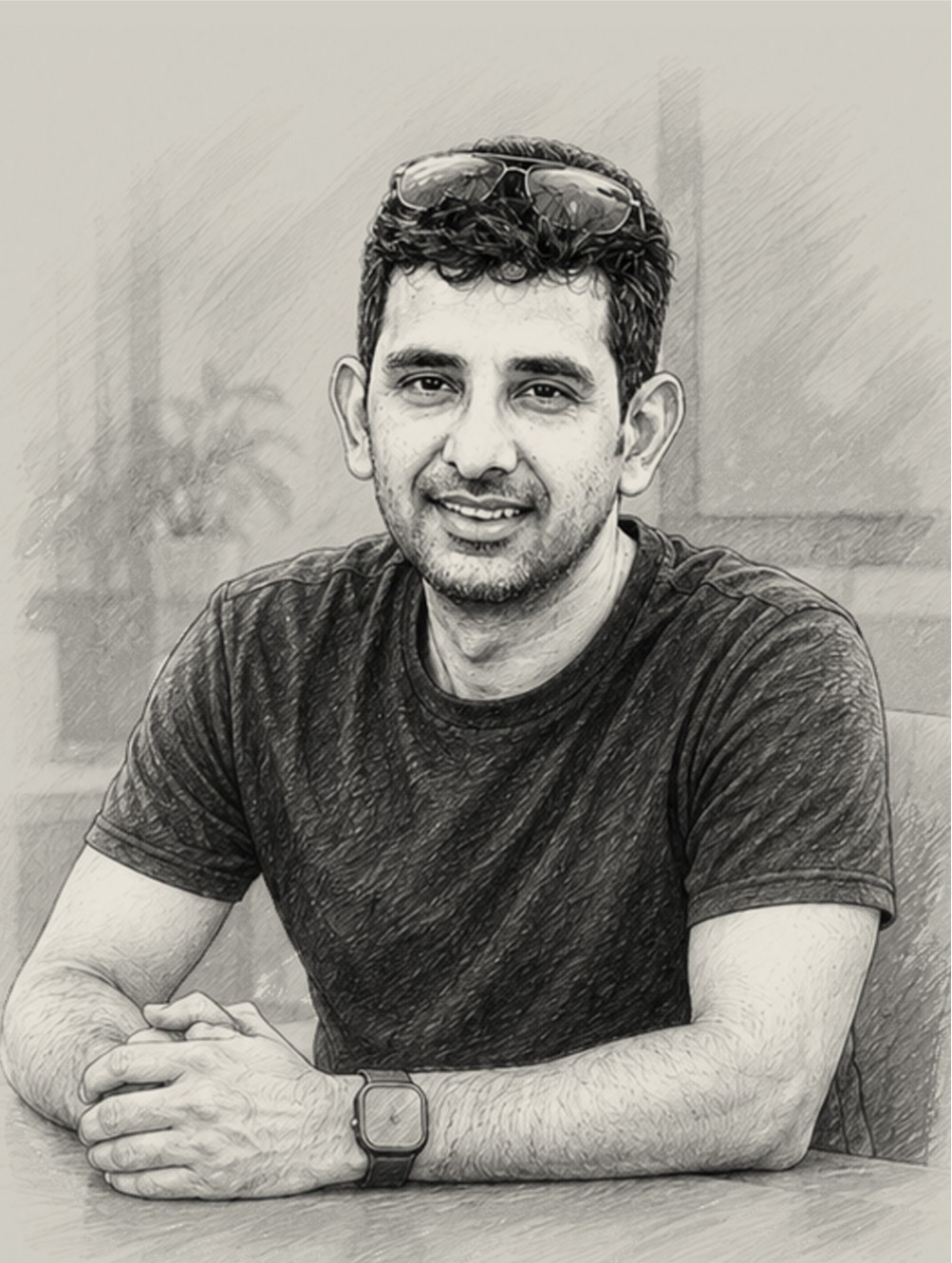
"The hardest thing to build isn't a complex system, but a simple experience for a complex world."
BACKSTORY
I’ve always believed that the most powerful technologies are the ones that disappear. My career has been a journey from the "silicon" end of the spectrum—building Linux drivers and LTE modems at Broadcom—to the "human" end: figuring out how a farmer in rural India can use their voice to navigate the digital economy.
When I co-founded Liv.ai, we weren't just building a speech-to-text startup; we were trying to solve a fundamental literacy gap in tech. We wanted to build a bridge for the next 200 million users who don't speak "Internet English." When Flipkart acquired us in 2018, that mission didn't change—it just got a massive laboratory. Leading conversational commerce and later AdTech at that scale taught me a vital lesson: innovation is worthless if it isn't accessible. You can build the most sophisticated NLP engine in the world, but if it doesn't help someone buy their first smartphone or help a small seller find their first customer, it’s just code.
This journey from 0→1 as a founder to 1→100 as a leader at Flipkart has tuned my "people filter" in a specific way. I look for the "translators"—the engineers and founders who can take deep-tech complexity and turn it into intuitive, vernacular human experiences. I’ve realized that my superpower is identifying that rare intersection of technical rigor and empathy for the user.
After nearly two decades of high-velocity building, I’ve stepped back to mentor early-stage founders. It’s a period of intentional reflection—not just looking for the next big thing, but looking for the right way to build it. I’m here to help the next generation of tech and product founders ensure that while they reach for the stars, they keep their feet firmly planted in the realities of the users they serve.